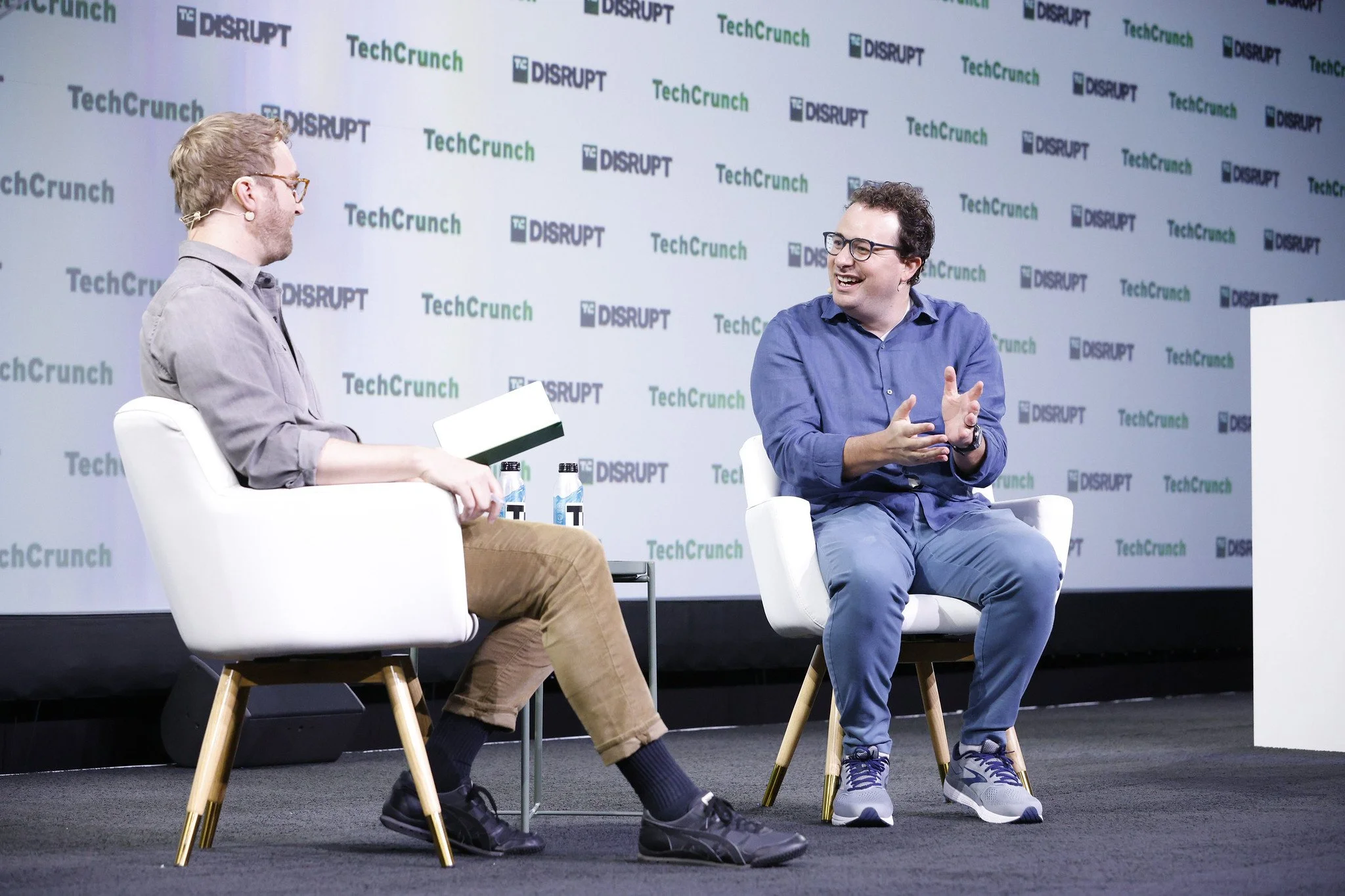
Anthropic co-founder Dario Amodei at TechCrunch Disrupt 2023. Photo by Kimberly White / Getty Images for TechCrunch.
Bun merged an AI-assisted rewrite in 11 days. Buyers counting on that kind of speed need to know who can change the checks when the agents get it wrong.
When Claude’s coding agents hit compiler errors during Bun’s rewrite, they got some of the code to compile by leaving functions unfinished. They wrote long comments to justify their workarounds. Bun’s founder, Jarred Sumner, told the agents reviewing the code to reject fixes that needed a paragraph of explanation.
Bun merged the rewrite into its main codebase in 11 days. Getting there took agents that could write code at speed and an engineer who could tell when they’d taken a shortcut. If faster delivery is part of the case for an acquisition, the buyer needs to know who makes those calls and whether they’ll still have the authority to intervene after the deal.
Anthropic had bought Bun five months earlier, in December 2025. Its AI coding tool, Claude Code, already ran on Bun. Sumner used that same tool to rewrite Bun in Rust, a different programming language.
What can I expect from a subscription?
Real-world strategies for navigating the future of work.
AI AGENTS AT WORK
Everything you need to know about how AI agents are changing teams and ways of working.
SUPERHUMXN IRL
Real insights from investors and operators.
MEMOS ON PEOPLE, CULTURE & AI AT WORK
The latest use cases and strategies for change and transformation.
Why Bun Changed Its Ways
Before the deal, Bun used a Claude Code bot in its internal Discord to help fix bugs. The bot had to submit a test that failed on the old version and passed on the patched one. That gave the reviewer a way to reproduce the bug and check the fix.
The rewrite started with a problem Bun had been trying to solve for years. Some of its hardest bugs came from code that used memory after freeing it or tried to free it twice. In safe Rust, the compiler can catch many of these errors before the program runs. Bun also had a way to check whether the move preserved what users already relied on. Its tests were written in TypeScript, so the team could run the same suite against the original and the rewrite.
The rewrite had to preserve how Bun behaved across its supported platforms. Sumner spent much of the project reading what the agents produced and adjusting their instructions. He checked that the existing tests had run before merging the rewrite on day 11. His account also lists 19 regressions that were found and fixed.
Sumner also separated the agents writing changes from the agents reviewing them. The reviewers were asked to look for ways a change could break the program. In one example he published, a reviewer flagged code that compiled but could free a piece of memory while an operation still needed it. The test suite gave Sumner a way to check how the program behaved. The separate review gave him a way to catch faults in the code before they showed up in use.
The Discord bot could follow a rule Bun’s engineers had already worked out for bug fixes. The rewrite exposed a gap between what the compiler could tell Sumner and what he needed to know. Code that compiled still had to do the same job as the code it replaced. That was the standard Sumner set for the agents and the one he used to judge their work.
What the 11 Days Measured
The clock stopped when Sumner merged the rewrite into Bun’s main codebase. He describes that as the point at which he was prepared to commit to the rewrite. Releasing it to users was a separate decision. By the time he published his account, Bun had completed 11 rounds of security review after the merge and addressed the findings. A buyer assessing delivery speed would want to see the dates for both milestones and the work that happened between them.
There was a cost behind that pace, too. At the busiest point, about 64 instances of Claude were running in parallel. Sumner put the model usage before merge at about $165,000 at API prices. That was an estimate based on usage. He also estimated that a small team working by hand would have needed about a year, while saying Bun would have kept fixing individual bugs instead of attempting the rewrite that way. The commercial gain was being able to tackle a project the team would otherwise have shelved. That is a different claim from a recurring saving on engineering time.
Who Sets Priorities After the Deal?
Working inside Anthropic gave Sumner access to a pre-release Claude model that he used for much of the rewrite. Anthropic, for its part, already relied on Bun to run Claude Code. Both teams had a reason to make Bun more reliable.
Bun had already been prioritising issues from the Claude Code team for several months when the deal was announced. It expected the teams to work more closely while keeping enough independence to serve other users. The announcement gave little detail on how they would set priorities together.
A survey of 118 acquisition and integration managers found that an acquired start-up’s freedom to make decisions was associated with greater innovation as reported by the buyers, even when the start-up was absorbed into the buyer’s organisation. Where a team reports and which decisions it gets to make are two separate choices.
Sumner could change how the rewrite was reviewed and decide when to merge it. The long-term question of how Bun and Anthropic will share control of the roadmap is still open. For buyers, it’s worth asking about both kinds of decision. Who sets the team’s priorities, and who can change a check or hold a release once the work is underway?
Who Gets Time to Test?
Bun could run an existing test suite against the code its agents produced. For a research team, checking an AI-generated design can mean making a molecule and finding lab time to test it. In a 2025 Nature study, researchers at Stanford and the Chan Zuckerberg Biohub used AI agents to design 92 small antibody fragments. To find out which designs bound to the viral protein, the researchers had to test them in the lab.
The researchers divided the computational work among agents with different jobs. One coordinated the work, specialists helped build the design process, and a critic scrutinised their proposals. At the lab bench, people made and tested the candidates. Two designs showed stronger binding to newer variants while retaining strong binding to the original spike protein. The tests were what made those candidates worth following up.
Google DeepMind reports that researchers already struggle to book time at experimental facilities. It expects the pressure to grow as agents produce more ideas worth testing. DeepMind has set up a wet lab at the Francis Crick Institute and is funding independent scientists to test hypotheses developed with its Co-Scientist system.
When an acquired team depends on a partner or shared facility, a buyer needs to establish what access carries over after the deal. The researchers may know which result warrants a second experiment, but getting that experiment done depends on who can secure the time. That’s where the pace of generating ideas meets the pace at which the team can act on them.
What to Ask Before Signing
Ask the team to show you a piece of work an agent produced that they rejected. Find out who spotted the problem, what they changed in the review process and what evidence let them try again.
A project record is more revealing than a demonstration. In software, the rejected change, the test results and the review comments can show how the team decided it was ready to try again. In a lab, the equivalent is the record of how candidates were ranked, tested and selected for follow-up. Ask who else on the team can explain the decision. That tells you as the buyer where judgement is shared and where it depends on a particular person.
Then go back to the delivery assumptions in the deal. Compare projects at the same milestone and include the time spent reviewing and reworking what the agents produced. Check which tools, people and testing capacity the team used to get there. That gives the buyer a basis for deciding how much of the reported speed to build into the deal and what it will need to fund after close.
Agree before signing who can change the checks and who can hold a release when the work fails them. Put those decisions in the integration plan alongside the delivery targets the buyer is counting on.