Why A Cow Collar Company Is Worth $2 Billion
Reading Time: 7 Minutes
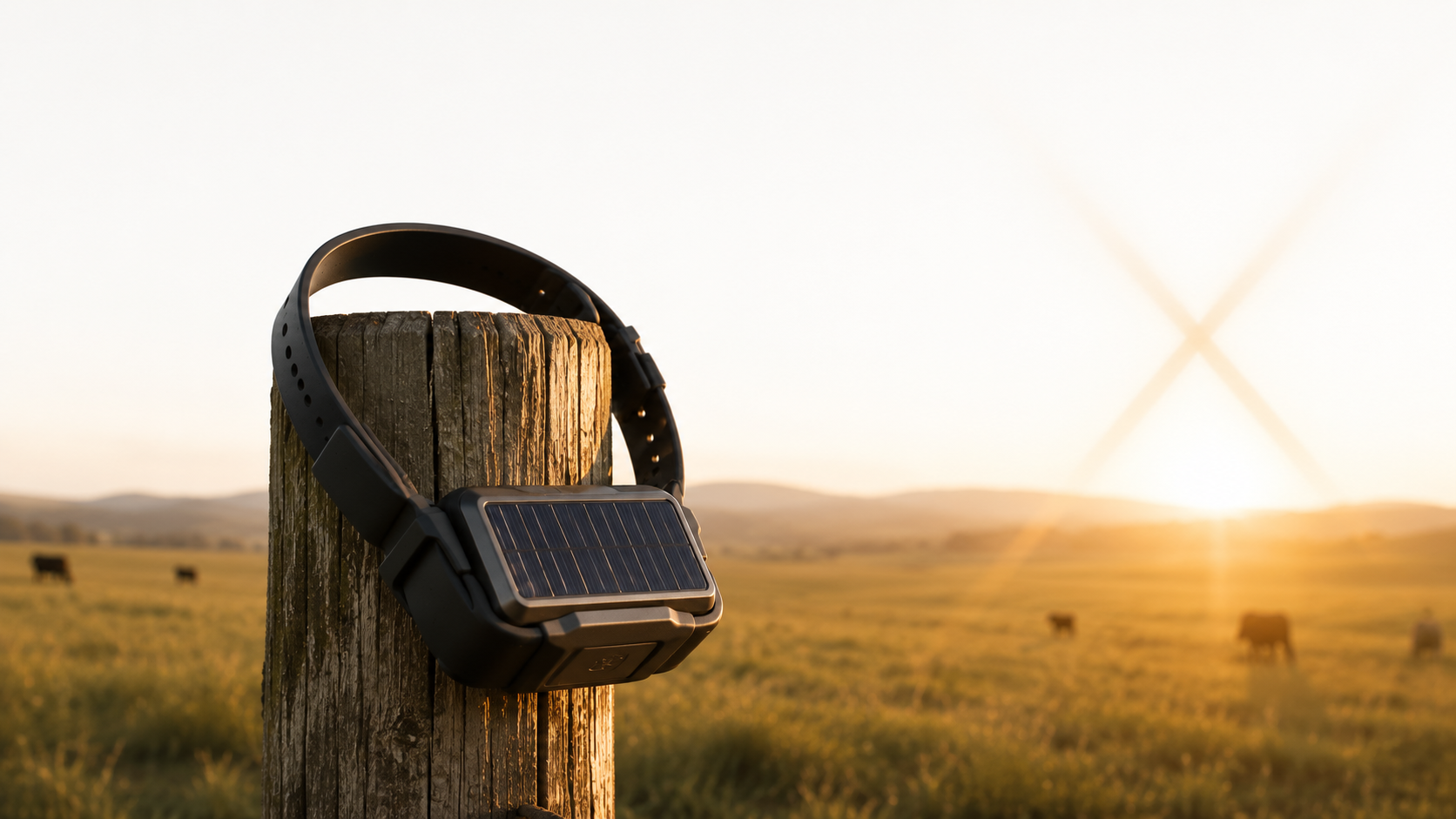
Image created by Superhumxn team.
Halter just reached a $2 billion valuation, something only about ten ‘agtech’ companies, the businesses selling technology to farms and ranches, have ever reached. Half of those later went bankrupt, and the sector's funding has fallen 70 percent from its peak.
Is Halter is the shake-up agtech needed?
Craig Piggott's parents were Halter's first customer. Ten years later, the company their son co-founded with Max Olson raised $220 million at a $2 billion valuation, led by Founders Fund, which first backed it at Series A in 2017, with Blackbird, DCVC, Bond, Bessemer, NewView, Ubiquity, Promus and Icehouse Ventures participating. Nine months earlier, a Series D led by Bond had valued Halter at roughly $1 billion. The valuation doubled in under a year, in a sector where almost nothing is going up.
Why is that?

What can I expect from a subscription?
Real-world strategies for navigating the future of work.
AI AGENTS AT WORK
Everything you need to know about how AI agents are changing teams and ways of working.
SUPERHUMXN IRL
Real insights from investors and operators.
MEMOS ON PEOPLE, CULTURE & AI AT WORK
The latest use cases and strategies for change and transformation.
USP
Fences at $20,000 a mile
Cattle graze on pasture, and controlling where they graze means fences, posts and wire across land that can run to thousands of acres. Building and maintaining conventional fencing costs around $20,000 per mile. Halter replaces it with a solar-powered collar on each animal and an app. The rancher draws a boundary on a phone, the collar plays a sound as the animal approaches the line and vibrates gently if it keeps going, and most cattle learn the system within about three encounters, a sequence Piggott has compared to a car's parking sensor. After that, the herd can be moved, contained or split from the farmhouse, and the boundary can be redrawn every day.
Halter charges a recurring US$5 to $8 per cow per month covering hardware and software, with a one-time infrastructure investment starting around $4,500 for the solar towers, and no battery replacements because the collars charge themselves. Independent economics back the category's basic maths. A Rangelands journal study built a full cost model for a 300-cow, 30,000-acre western ranch and compared virtual fencing systems against barbed wire, and extension analysts put the technology as economical for herds upwards of about 100 head. Piggott told TechCrunch the company has been built around financial return from day one, with better-managed grazing lifting land productivity by as much as 20 percent on his account, and the engineering bar sits underneath the whole proposition: a thousand-animal system at 99 percent reliability still means ten loose animals, so the product has to hold up across huge terrain and bad weather at what he calls many nines.
Retention
One million collars
Halter has sold one million collars and serves more than 2,000 ranchers and farmers across New Zealand, Australia and the United States. Since launching in the US in August 2024, American ranchers have built 60,000 miles of virtual fencing with the system across 18 states. Blackbird, an investor since the early rounds, reported seven consecutive months without a single customer cancelling, and says one in ten New Zealand ranches now uses Halter. "The fact that they're using Halter tells us our technology has earned their trust," Piggott said in the announcement.
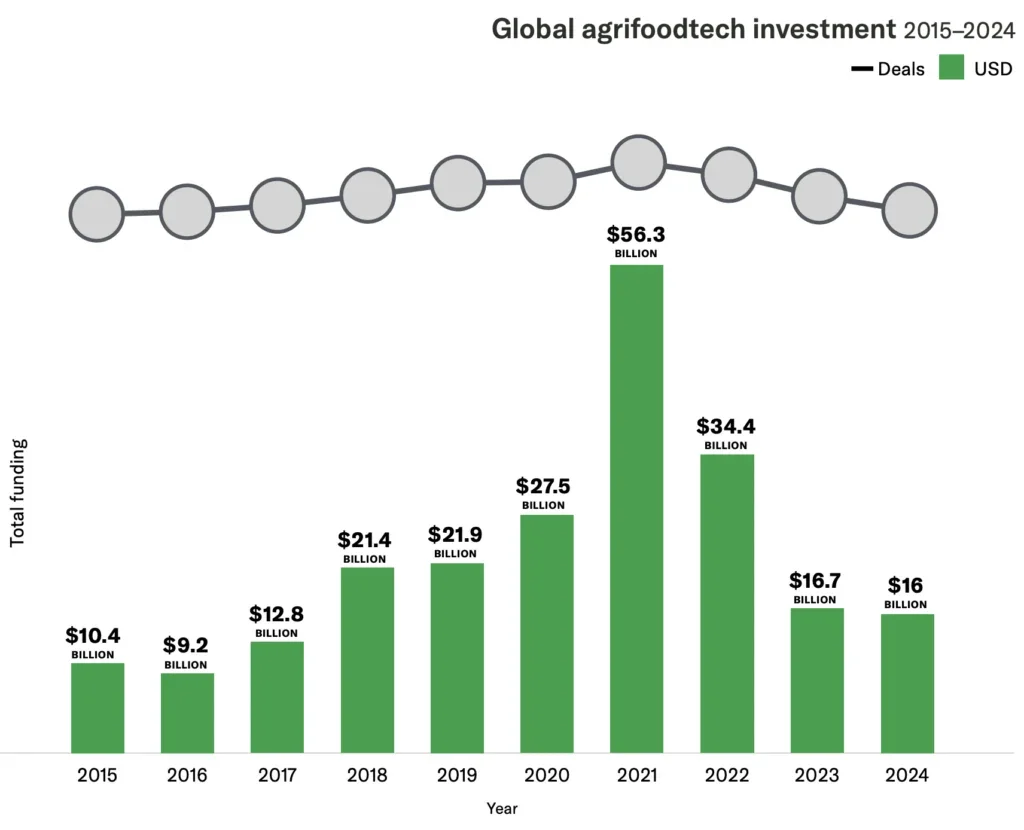
Image Source: AgFunder Global AgriFoodTech Investment Report 2026
Global agrifoodtech funding fell from $51.7 billion in 2021 to $16.2 billion in 2025. Halter's valuation doubled over the final nine months of that chart.
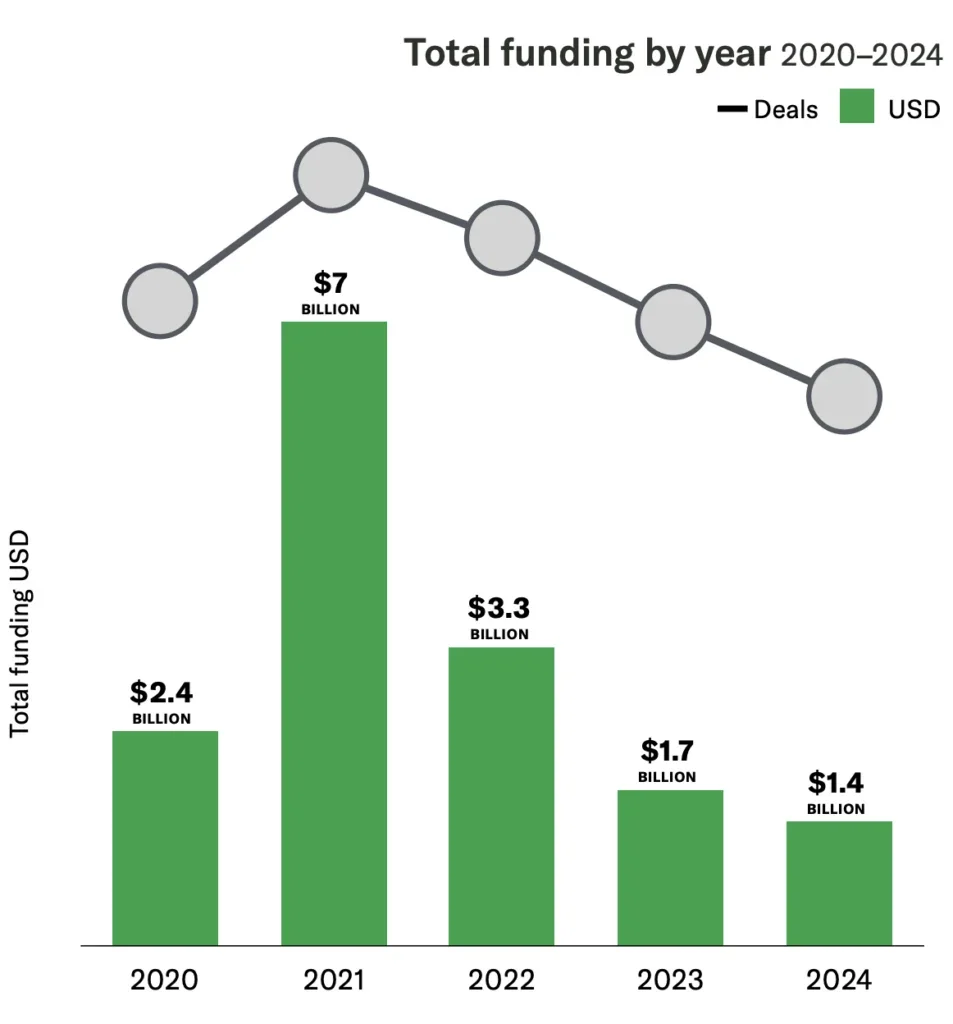
Image Source: AgFunder Global AgriFoodTech Investment Report 2026
Global agrifoodtech funding fell from $51.7 billion in 2021 to $16.2 billion in 2025. Halter's valuation doubled over the final nine months of that chart.
Shrinkage
The $2 billion graveyard
The sector around Halter has spent four years shrinking. Global agrifoodtech funding is down more than 70 percent from its 2021 level, at $16.2 billion in 2025, after a wave of down rounds and failures across vertical farming and food delivery. By AgFunder's count, only about ten agtech companies have ever reached a $2 billion valuation, and half have since filed for bankruptcy. The odds show up inside Halter's own cap table. Icehouse Ventures, which backed Piggott at 22,wrote that of the 22 other companies it funded in 2016, eight have failed.
Amin Mirzadegan, the Founders Fund partner on the deal, pointed to one possible cause: agtech startups struggle to get products into farmers' hands consistently, while Halter's has been folded into how ranchers run their operations daily. Piggott goes further and rejects the category. He has never viewed the company "through the lens of agtech", he told AgFunder News, and says Halter should not be constrained to agtech investors.
Competition
Four collars in the field
Halter is not alone out there. Four companies sell virtual fencing in the US, and each arrived from a different direction. Vence belongs to Merck Animal Health, which acquired it to sit alongside its animal-health portfolio, and leases collars rather than selling them. Nofence, the Norwegian pioneer, raised what its investors described as Europe's largest agtech round of 2025 and is the only system that also fences sheep and goats. And eShepherd is built by Gallagher, the New Zealand company that has sold physical and electric fencing since 1938, which means the incumbent that dominates the old product is manufacturing its own replacement. A strategic has already bought into the category, the fencing giant is defending it from inside, and the pure-play with the most collars in the field is the one that just took $220 million.
Halter's newest product removes its own biggest constraint. The company has launched direct-to-satellite collar connectivity, which takes the solar tower network out of the equation on remote ranches and widens the land the system can serve.
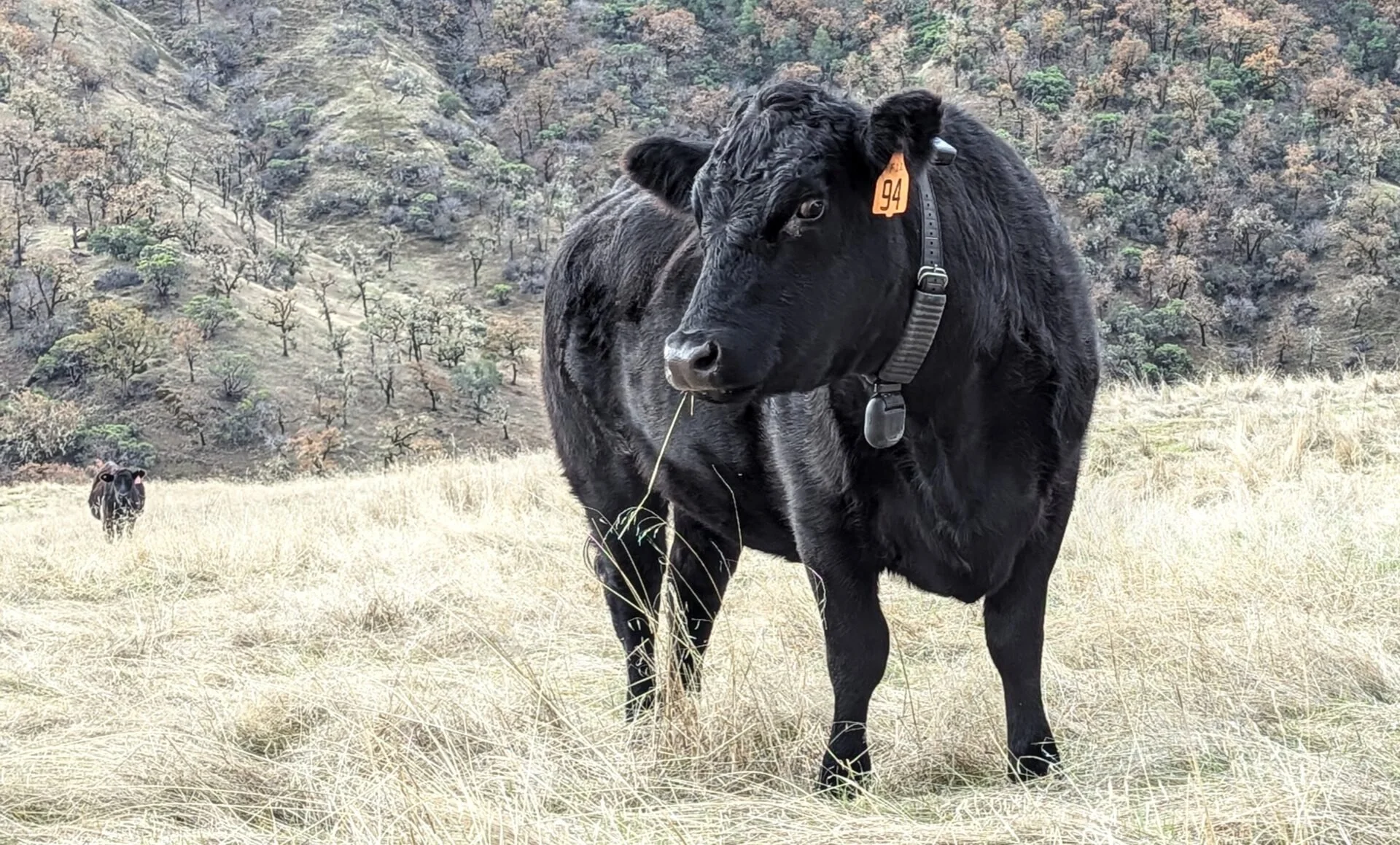
Image Source: AgFunder
A cow outfitted with Halter's 'smart' collar.
Culture
Moving fast
Halter promotes from inside. Ben joined as the first software hire in 2017, while still at university, and ran product engineering by 2022. Andy joined as a mechanical engineering graduate the same year and made the executive team as VP of product and engineering in 2023. Helen came from Xero in 2022 and was promoted three times in three years to VP of marketing and growth. The company's careers page tells applicants that customers and their animals come first, and that unless the work feels uncomfortable the team is not moving fast enough.
The Series E pays for more than 220 hires, the company's largest recruitment push, centred on engineering, product and customer operations in Auckland, with expansion into the UK, Ireland and South America later this year, markets Piggott calls "natural fits" for pastoral systems like New Zealand's. Postings for those roles require regular ranch visits and hands-on field work, in an industry that has historically extended very little trust to outside technology vendors.
Sceptics
Unproven $2 billion
Halter has not yet published audited accounts. The numbers behind the $2 billion valuation come from the company itself and Blackbird. And the market is smaller than the herd; the opportunity is smaller than the world's 1.5 billion cattle suggests. Farm advisors' cost analysis puts the break-even at herds of roughly 100 animals and up, and much of the world's cattle live on farms smaller than that.
The valuation case, however, relies on the cost of fences. Ranchers spend about $20,000 a mile building and maintaining fences. Halter's collars replace the fences, and the ranchers who start paying keep paying, seven straight months without a cancellation. Does that warrant a $2 billion valuation? Tbc.
Close
Antony Yousefian, partner at The First Thirty Ventures, argues that virtual fencing is just the first thing the collar does. A collar on every animal produces a continuous stream of health, reproduction and grazing data, and a dairy cow generates $15,000 or more in gross revenue over its lifetime. Catch a health issue two days earlier or tighten a calving interval, and the collar earns more than the fence it replaced. On his maths, a million collars against the world's 1.5 billion cattle is under one percent penetration, which makes $2 billion early innings.
Halter's valuation shows that investors still pay for businesses solving expensive problems well, even when the sector lags.