Overheard June 2026: AI Founders On Hiring & Culture
Reading Time: 7 Minutes

Image created by Superhumxn team.
AI funding has set a new record this year.
Between March and May 2026, ten AI companies raised rounds ranging from $11 million to $5 billion. Their founders have been candid about who they hire and who they turn away, what they'd refuse to sell, and what keeps them up at night.
Here's what they said:
What can I expect from a subscription?
Real-world strategies for navigating the future of work.
AI AGENTS AT WORK
Everything you need to know about how AI agents are changing teams and ways of working.
SUPERHUMXN IRL
Real insights from investors and operators.
MEMOS ON PEOPLE, CULTURE & AI AT WORK
The latest use cases and strategies for change and transformation.
Cognition AI
CEO Scott Wu told Lenny's Podcast that the shift in engineering work at his company amounts to engineers moving from "bricklayers to architects." Each of Cognition's 15 engineers supervises roughly five working instances of the company's coding agent Devin.
May 2025. By the time Cognition closed its $1 billion Series D at a $26 billion valuation in May 2026, Devin was committing 89% of the company's own code, and run-rate revenue had reached $492 million. One of the only publicly disclosed agent-supervision ratios from any company in this category.
Sierra
Co-founder and CEO Bret Taylor, on the Acquired podcast, described Sierra's purpose as building "a machine to produce happy customers." He has said the instruction he gives employees is to fix the machine rather than patch its output.
2024. Taylor previously co-led Salesforce as co-CEO and served as Facebook's CTO. The framing is Sierra's internal shorthand for diagnosing problems at the system level rather than the individual incident level.
Halter
Founder and CEO Craig Piggott told Newsroom NZ his team's bigger risk is "excessive humility" that blocks ambition.
December 2025. Piggott grew up on a dairy farm in New Zealand and founded Halter at 21. The company's $220 million Series E in March valued it at $2 billion.
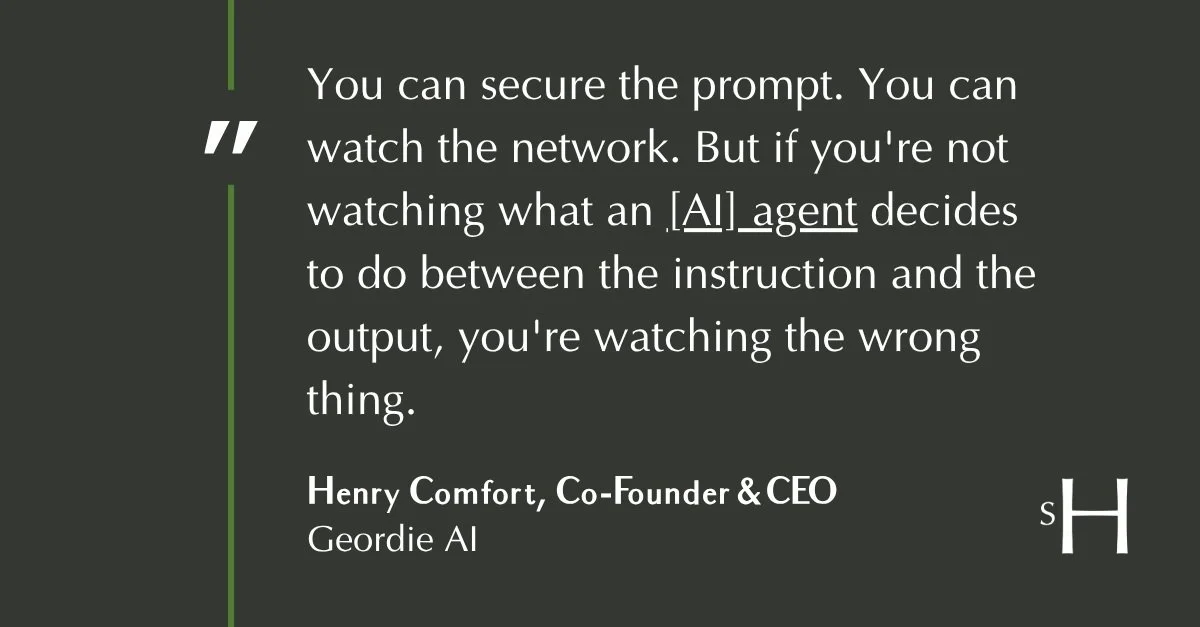
Image created by the Superhumxn team.
Halter, Pt. II
Piggott has also spoken about the mindset that carried Halter through its hardest years, before the company had sold a single collar. "It was naivety that got us through those days," he told the New Zealand Herald.
Herald retrospective marking Halter's eighth year. Piggott left a job at Sir Peter Beck's Rocket Lab to start the company, and Beck became one of its first backers and directors.
Legora
CEO Max Junestrand, asked on the Artificial Lawyer YouTube channel how Legora planned to stay culturally aligned while scaling, said he looks for people who are talented, passionate, and "no assholes."
December 2025, after Legora had scaled from 40 to over 220 employees in a year.
Legora, Pt. II
On the 20VC podcast, reported by Business Insider, Junestrand said he personally interviews every candidate and asks what he calls "quite brutal questions," built around one challenge, why take a hard job when an easier one is available elsewhere. He has described the philosophy behind that filter as building a team of missionaries rather than mercenaries, borrowing an analogy coined by venture capitalist John Doerr.
January 2026. Legora had 300 employees at the time and had doubled headcount in the prior six months, competing against San Francisco-based Harvey at roughly a quarter of its funding.
Geordie AI
CEO Henry Comfort has said organisations can secure the prompt going into an AI agent and watch the network around it, but if nobody is watching what the agent decides to do between instruction and output, "you're watching the wrong thing."
Pulse 2.0, May 2026. Geordie raised a $30 million Series A that month to build agent governance tooling, valuing the company at about $180 million.
Geordie AI, Pt. II
Comfort has also pushed back on the idea that agent governance belongs bundled into the platforms selling the agents themselves. Of competitors like Microsoft's Agent 365 and ServiceNow's AI Control Tower, he told Fortune, "we're playing a different game to those guys."
May 2026. Geordie is deployed across roughly 30 customer environments, including financial data company AlphaSense and biotech firm Owkin, and won the 2026 RSAC Innovation Sandbox in March, a contest whose past finalists include Wiz and SentinelOne.
Cohere and Aleph Alpha
CEO Aidan Gomez, asked at Toronto Tech Week about a nine-figure acquisition offer Cohere had turned down years earlier, said the company is "not for sale." Gomez has also warned that brain drain, not a lack of ambition, is the bigger threat to Canada's tech sector, as founders and engineers gravitate toward Silicon Valley.
The remarks resurfaced in April 2026 when Cohere announced it was combining with Germany's Aleph Alpha. Cohere has received up to $240 million from Canada's federal sovereign AI compute programme.
Rebar AI
Co-founder Evan Brown pointed to years spent completing HVAC estimates by hand at Johnson Barrow as the origin of Rebar's product. He has described the resulting AI as one that "mirrors the workflows real estimators use when building a quote."
March 2026. Rebar raised a $14 million Series A. Seven of the company's 40 clients are also investors, and the company doubled its annual recurring revenue in the first six weeks of 2026.
Amigo AI
Founder Ali Khokhar described his mother's breast cancer diagnosis when he was eight years old as the origin of the company's mission. He's also said the company "can't hire fast enough," needing to double headcount again within months of the last raise.
AlleyWatch interview, March 2026. Amigo AI raised an $11 million Series A led by Madrona.
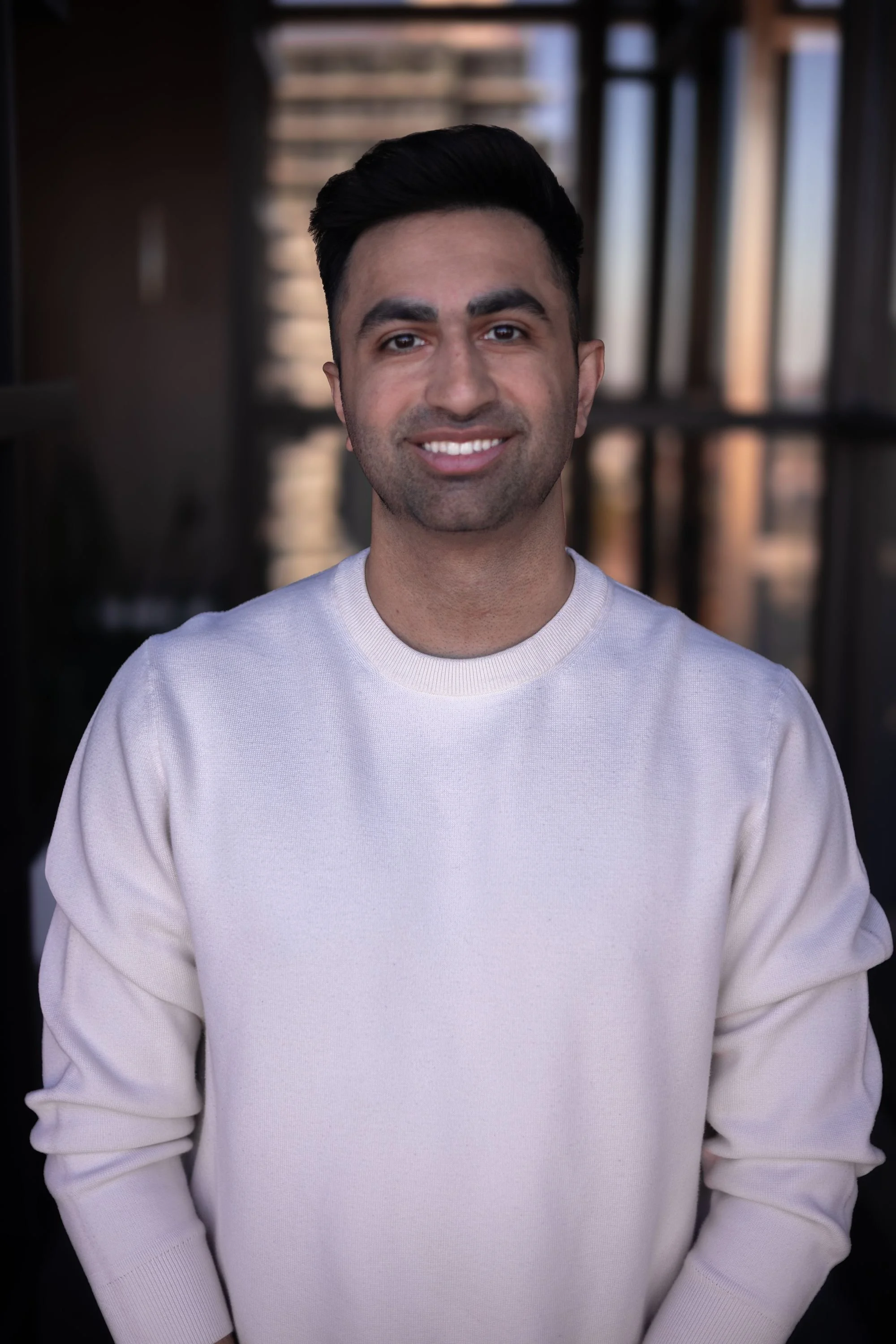
Image via Ali Khokhar / LinkedIn.
Amigo AI, Pt. II
Khokhar has framed Amigo's approach around clinical stakes rather than software convention. "We train our agents like doctors because mistakes can cost lives in healthcare," he told Healthcare IT Today.
March 2026. Amigo's Digital Residency programme has processed more than three million patient encounters with zero reported safety incidents, according to the company.
Fazeshift
Co-founder Caitlin Leksana called accounts receivable a "snowflake" problem. Every customer relationship carries its own invoicing requirements, which is why automation that works for one client often fails for the next.
Crunchbase News, May 2026. Fazeshift raised a $17 million Series A that month, bringing total funding to $22 million. Leksana and co-founder Timmy Galvin discovered the problem while colour-coding spreadsheets to track payments for ten customers at their previous company. Fazeshift's revenue has grown twelvefold over the past year, and its customers now include eight unicorn companies.
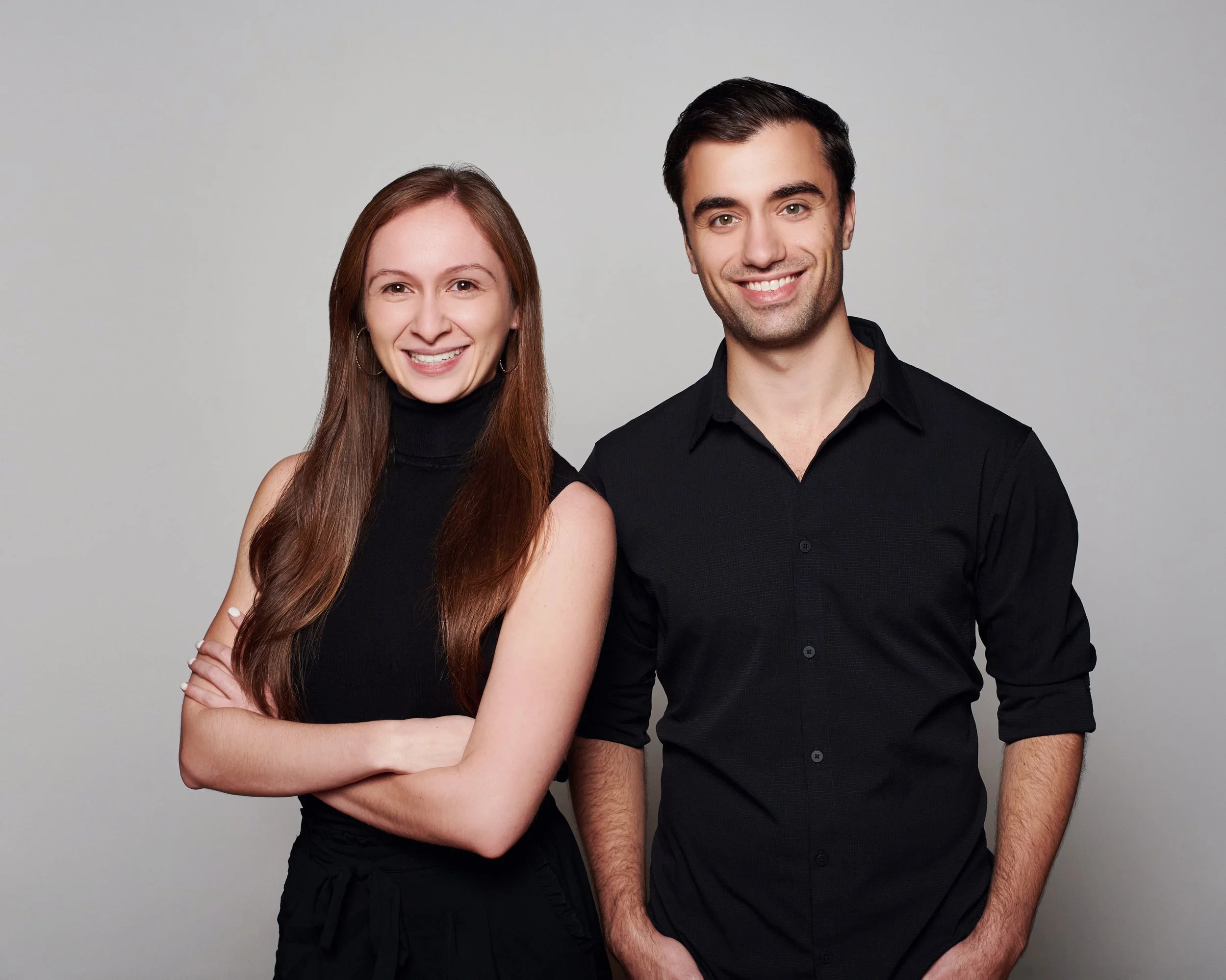
Image Source: BusinessWire
Fazeshift founding team: Caitlin Leksana, co-founder and CEO, and Timmy Galvin, co-founder and CTO.