Legora’s "No Assholes" Hiring Rule
Reading Time: 7 Minutes

Image created by Superhumxn team.
500 legal AI startups launched around the same time as Legora in 2023. Legora is now worth $5.6 billion. What's different about them?
Max Junestrand was asked how Legora planned to scale a team while growing faster than almost any company in legal tech. His answer, recorded on Artificial Lawyer in December 2025, was three criteria. "If we bring talented, passionate, and just like no assholes into the business," he said, "and we focus all and channel all that energy into these problems."
At the time the interview was released, Legora had scaled from 40 employees to over 400 in under twelve months, crossed more than 40 legal markets, and achieved 300% net revenue retention. In March 2026, the company raised $550 million led by Accel, followed by a $50 million extension backed by Nvidia's NVentures and Atlassian in April, bringing the total Series D to $600 million and the valuation to $5.6 billion.
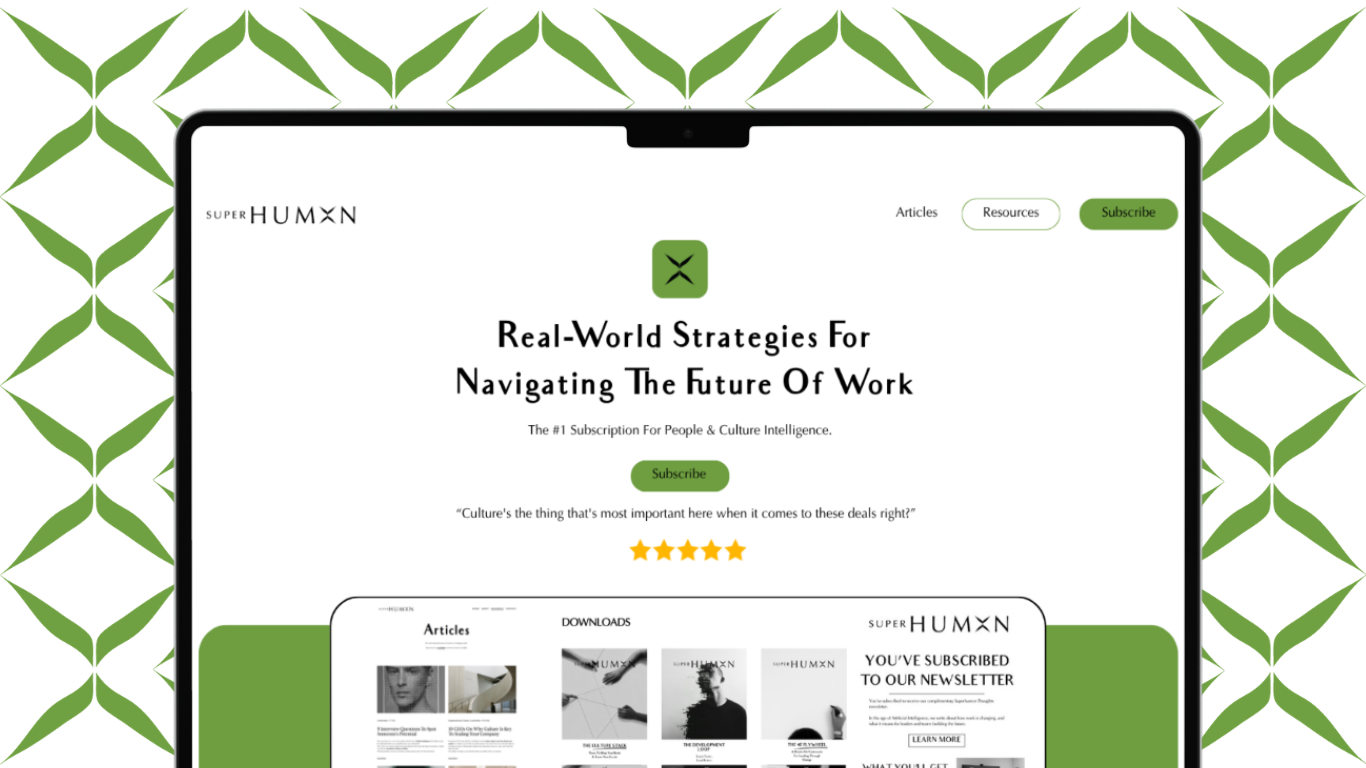
What can I expect from a subscription?
Real-world strategies for navigating the future of work.
AI AGENTS AT WORK
Everything you need to know about how AI agents are changing teams and ways of working.
SUPERHUMXN IRL
Real insights from investors and operators.
MEMOS ON PEOPLE, CULTURE & AI AT WORK
The latest use cases and strategies for change and transformation.
Vibes
The hiring criteria
SocialTalent's April 2026 research found that without behavioural anchors, clear examples of what good and bad look like, interviewers often mistake familiarity for culture fit. Cogn-IQ agreed: "If you cannot articulate your organisational values in specific, behavioral terms, then you don't have values to assess fit against. You have vibes. And vibes are bias."For Junestrand, that translates into three criteria. Talented, passionate, and no “assholes.”Junestrand probes for fit by asking candidates to describe the most recent rabbit hole they went down and teach him something unusual about it. One candidate brought a violin because she'd recently taught herself to play, then played it on the spot. He screens for a demonstrated history of doing something exceptional in any domain, sports, school, a professional role, or in his own case competitive esports. And he looks for what he calls the mindset that you can "just do things," a bias toward action.

Image Source: TechCrunch
Max Junestrand, CEO and co-founder of Legora, March 2026.
Competition
Why work hard when you don’t have to?
On the Not Another CEO podcast, Junestrand described one of his favourite interview questions. He asks every candidate what he calls "quite brutal questions," around a central idea: Why take a hard job when you could work somewhere easier? This tests whether the candidate has deeply thought about what they're signing up for. It also invites further probing that digs into their underlying motivations. Junestrand has described the kind of person this selects for as someone with "raw grit," someone who embraces long hours and intense commitment because the mission itself is the draw. In the Artificial Lawyer interview, Junestrand described Legora as a team of missionaries rather than mercenaries. They've grouped together to build something they believe in, with the real competition understood to be outside the company rather than between colleagues inside it. Junestrand has crafted a narrative around an image of enemies outside the gates and unity inside them. He's used this consistently, and it sharpens the "no assholes" rule. Legora aren’t hiring for likeability. Rather, Legora are hiring people who are loyal, and compete externally versus with their own team.

Image Source: Fortune
Winston Weinberg, CEO and co-founder of Harvey, March 2026.
8pm dinner
Deals on New Year’s Eve
Artificial Lawyer's reporting on Legora's day-to-day culture supports their hiring intensity. Dinner at 8pm in the office is standard BAU at Legora. The company has closed deals on New Year's Eve. At the Christmas dinner, they served mulled wine next to the sales dashboard. "Everybody kept looking at it," Junestrand told Business Insider, "because everybody wants momentum."
The episode title of Junestrand's 20VC appearance in August 2025 with Harry Stebbings was "Building a 9-9-6 Culture From Stockholm." The 9-9-6 schedule, 9am to 9pm six days a week, originated in Chinese tech and has become a shorthand for the kind of pace AI startups are increasingly open about running at. In the same interview, Junestrand described turning down what he estimated was a $5 to $10 million career in competitive gaming to build Legora instead.
Junestrand has created an environment where rest and work blur together more than most people would consider healthy. Zero apologies. When asked about it, he pointed to the fact that roughly 500 other legal AI startups were founded around the same time Legora was, and that the window for becoming the go-to platform in any given country doesn't stay open long.
Scale
Name ten people you recommend
Junestrand described on the Not Another CEO podcast how Legora scaled headcount so quickly. Ask every new hire to write up ten names of people the company should bring in next. Most people won't put their name behind someone they know is difficult to work with. There’s a level of pre-screening even before any interview takes place.
Mannheimer Swartling, the largest law firm in the Nordics, was Legora's first major client. Getting into the managing partner's calendar was, Junestrand has said, harder than breaking into Fort Knox. When he finally “broke” in, he told them AI was going to be critical to their business and that Legora and the firm needed each other to figure it all out. Legora was running on a €50,000 angel round at the time and couldn't afford its own office, so the team worked from inside the law firm itself. That proximity, Junestrand has said, accelerated everything that came next.
Decisions
Harvey
Harvey is Legora's most direct competitor in legal AI, now valued a t$11 billion after Sequoia tripled down in March 2026. The two companies are racing for the same clients, the same markets, and a lot of the same talent.
Where Junestrand screens for collegiality, Harvey CEO Winston Weinberg screens for decisiveness. In a March 2026 Fortune interview, Weinberg said employees must "re-earn" their role at Harvey every six months, including him. When evaluating hires, his main question is whether someone can make a decision, own it, and change course when they're wrong. "Instead of penalizing the mistake," he said, "penalize not making the decision or not learning from that mistake going forward." Harvey's internal shorthand for this, described by its’ Chief People Officer, is "don't take the square root of the weather.” I.e. decide fast versus overanalysing.
Speed
Swimming race

Image created by Superhumxn team.
Legora grew from 40 to 400 people in under twelve months. Harvey has more than $200 million in annualised revenue, roughly double Legora's rate, according to people familiar with their finances. When a smaller competitor is racing to out-hire a better-funded rival in the same market, the pressure to move fast is real. Junestrand, for his part, told Newcomer he wouldn't refer to Harvey by name. "If we were in a professional swimming race, I would say that Legora is looking down and other people are looking to the side, losing speed," he said. Weinberg, when asked how often clients weighed the two companies against each other, replied: "And like 30 others."
Glassdoor candidates rate Legora's interview experience as 29 percent positive, with a difficulty score of 2.45 out of 5, based on 38 submitted interviews. The average hiring timeline is 30 days, longer than BlackRock's 14 days and Apple's 21 days. It’s a demanding process that Junestrand intends to maintain as the company grows.
Specificity
Whether Legora's culture survives years of rapid growth remains to be seen. Whether "missionaries" still fits the company when it's ten times larger is a question only time can answer.
What stands out today is how Junestrand puts his hiring philosophy into practice. Rather than asking candidates whether they share the company's values, he translates those values into specific interview questions, practical examples, and hiring decision criteria. Specificity reduces reliance on the “vibes” bias.