There Is No "AI Company Culture"
Reading Time: 7 Minutes

Image created by Superhumxn team.
Anduril, Sierra, and Halter are building very different companies. The best AI companies don’t copy each other. Their mission drives how they work.
After Facebook acquired Oculus in 2014, Palmer Luckey found his hiring pool had shrunk. Bret Taylor started Sierra in February 2024 and set out to hire as aggressively as the frontier labs. Craig Piggott founded Halter in 2016 after growing up on a New Zealand dairy farm, and has been warning his team that the Kiwi instinct toward modesty is costing the company ambition it can't afford to lose.
Anduril raised $5 billion in May at a $61 billion valuation. Sierra raised $950 million at $15.8 billion. Halter raised $220 million at a $2 billion valuation, the largest venture round ever raised by a New Zealand-founded company. All three are growing fast in distinct ways.
PwC's 2026 AI Predictions report describes a "vanguard" cohort of companies pulling ahead because they've nailed foundational practices like governance and workforce planning, with everyone else playing catch-up. Each of these three founders has built a culture around a consistent narrative of what their company needs to succeed.
What can I expect from a subscription?
Real-world strategies for navigating the future of work.
AI AGENTS AT WORK
Everything you need to know about how AI agents are changing teams and ways of working.
SUPERHUMXN IRL
Real insights from investors and operators.
MEMOS ON PEOPLE, CULTURE & AI AT WORK
The latest use cases and strategies for change and transformation.
“Crapshack”
Palmer Luckey and the Bay Area problem
When Facebook acquired Oculus in 2014, Luckey described the hiring pool as heavily "mercenary-minded," engineers who were good at the work but more interested in resume-building than supporting a mission. "Military vets do not want to live in San Francisco either," he said. "They don't want to pay $2 million to live in a crapshack."
When he started Anduril in 2017, he recruited nationally rather than regionally, with a deliberate focus on military veterans. Someone willing to relocate to wherever Anduril's facilities happened to be, rather than waiting for the company to come to them, was self-selecting for commitment over career convenience. He calls the people this approach filtered out "lily pad jumpers," people who treat each employer as a temporary platform for the next move.
In January 2026, Anduril put up a $500,000 prize for whoever could build the best autonomous drone-racing software. The real prize was a job interview, bypassing the standard hiring process entirely. The kind of person who enters a drone-racing competition in their spare time is exactly who Luckey has always been trying to hire, someone who builds things outside of what school or work requires. "When I hire people at Anduril," he said, "I look for people who have done projects that were outside of what their work paid them to do or what their school made them do. Because that means they're the type of person who is willing to work on things with their own money and their own time."
An employee account compiled from Glassdoor and tech interview reports describes Anduril as "mission-explicit, mission-engaged, less ironic-detached than typical SV," with ambivalence about the work screened out at the recruiter stage. Onboarding is described as "more thrown-into-the-deep-end than the typical FAANG ramp-up," with strong new hires thriving and weaker ones struggling without the structure most big tech companies would provide. Blind reviews from 2025 and 2026 rate Anduril 4.3 out of 5 overall, with career growth rated highest at 4.2 and work-life balance lowest at 3.3. Multiple reviewers describe 50 to 60-hour weeks as normal around demo days, and the environment as chaotic but rewarding for people who want to own their work end to end.
Anduril's Arsenal-1 manufacturing campus in Pickaway County, Ohio, a $900 million investment across five million square feet, opened ahead of its July 2026 target in March 2026, with production of the Fury combat drone beginning before the end of that month. The facility is projected to employ 4,000 workers by 2035, the single largest job-creation project in Ohio's history. COO Matthew Grimm noted the project came in both ahead of schedule and under budget, which he described as a rarity in the defence business.
A rock-solid hiring filter is how Anduril maintain pace at scale.
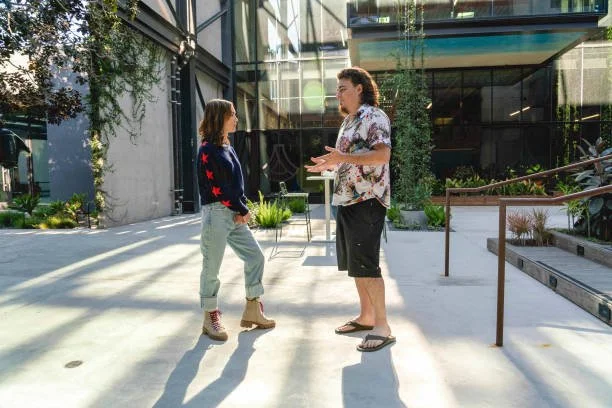
Image Source: Kyle Grillot/Bloomberg via Getty Images
Palmer Luckey, founder of Anduril Industries, during an interview on "The Circuit with Emily Chang" at Anduril's headquarters in Costa Mesa, California, December 14, 2023.
Talent
Bret Taylor x Sierra
Bret Taylor co-led Google Maps, ran Salesforce as co-CEO, served as Facebook's CTO, and currently chairs OpenAI's board. Clay Bavor spent 18 years at Google running Google Labs. When the two of them started Sierra in February 2024, they had credibility that most founders take decades to build.
They've leveraged this to hire widely. Asked on the Acquired podcast whether the compensation packages at OpenAI and Anthropic were pulling talent away from everyone else, Taylor pushed back. Sierra is "hiring a lot of people," he said, "just as all the AGI labs" are, competing directly rather than trying to find a different pool. On the same podcast he described Sierra's internal operating principle as "fix the machine, don't just fix the output of the machine."
This is clear in their hiring process. Sierra published "The AI-native interview" explaining why it replaced its old five-stage loop, two coding rounds, an algorithms and ML round, a system design round, a behavioral round, with a single onsite session in three phases: plan, build, review. In the build phase, the interviewer leaves the room and the candidate gets two hours to build a working product using whatever tools they want, with explicit permission to cut scope or change direction if they hit a wall. The old way was no longer reflecting how engineers work, given that a candidate can now solve a standard LeetCode problem with Claude Code in a few minutes. Sierra's Vijay Iyengar posted publicly after the blog went up that engineering leaders across the industry had been reaching out to say they were rethinking their own approaches.
Sierra crossed $100 million ARR in November 2025, seven quarters after its February 2024 launch, and Sacra estimates it reached $200 million by May 2026. The company made two acquisitions in the year leading up to its Series E: Opera Tech, a Tokyo-based enterprise AI startup acquired in March 2026, and Fragment, a Paris-based AI operations start-up acquired in April 2026. The two technical co-founders are closely involved in product decisions, inside a ship-fast environment that, given more than 40 percent of the Fortune 50 are now customers, has to move quickly without sacrificing reliability. People who do well there want direct access to senior decision-makers and are comfortable with fluid roles.
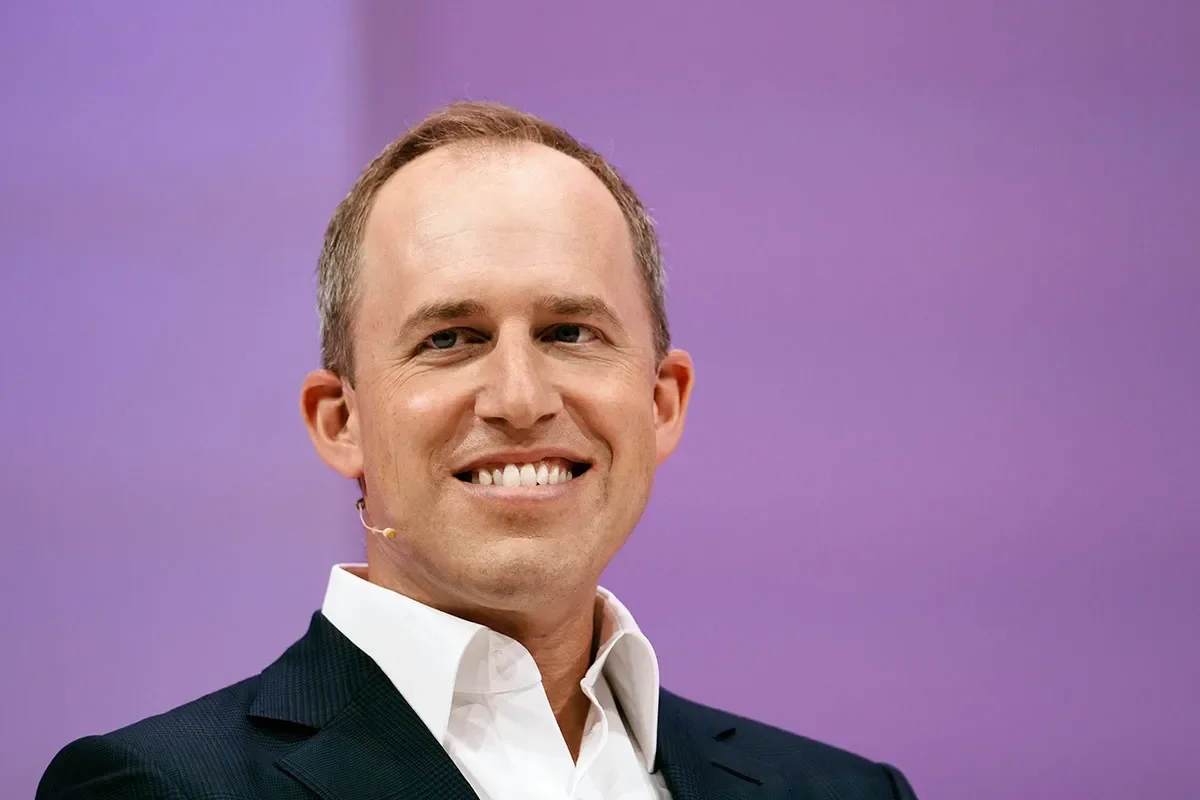
Image Source: Getty Images via TechCrunch
Bret Taylor, co-founder and CEO of Sierra, photographed for TechCrunch, April 2026.
Dairy farm
Craig Piggott's humility concern
Craig Piggott grew up on a dairy farm in New Zealand's Waikato region, waking before dawn to move cattle by hand. He studied mechanical engineering at the University of Auckland, worked briefly at Rocket Lab, and then at 21 went back to the problem he'd grown up living inside rather than chasing a more conventional tech career. He founded Halter in 2016. Nine years later, the company raised $220 million at a $2 billion valuation, backed by Peter Thiel's Founders Fund.
Halter's product is solar-powered, GPS-enabled collars that let ranchers create virtual fences and move herds from a smartphone app, using audio cues and gentle vibrations the company compares to the sound a car makes when reversing near a wall. More than 2,000 farms and ranches now use the system, with over a million collars sold. There's no agentic AI demo, no humanoid robot, nothing that fits the standard visual language of AI company profiles.
Speaking at the US Business Summit in December 2025, Piggott described trying to combine the best of New Zealand and American working culture. The New Zealand part, groundedness and a willingness to ask questions and admit mistakes, he wants to keep. The part he's been actively working against is what he calls "excessive humility," the instinct to hold back from stating ambitions plainly or pushing for more than feels polite. "Excessive humility — which gets in the way of trying or being openly ambitious — that's definitely a problem," he said. He credits the American side of the business for helping fix that, saying there's a lot Halter can learn from American ambition and that the company needs more of it.
In a TechCrunch profile timed to the Series E announcement, he extended the same point to risk generally, arguing that the comfortable default is the most dangerous choice, and that real rewards only come from taking hard risks. He cited cyclist Greg LeMond's line that "it never gets easier, you just go faster" as a description of what running Halter feels like.
Piggott noted that over half of US ranchers and farmers are over 55, with severe labour shortages across rural America. USDA data puts the average age of US farmers at 58.1 years. Halter's pitch to that market is about letting a smaller team manage what used to require more hands than most farms can find. The $220 million is being deployed into that thesis, with Halter planning to hire 220-plus roles across New Zealand, Australia, and the US in its largest-ever recruitment drive, and expanding into the UK, Ireland, and South America later in 2026. "Farmers in the UK and Ireland have been interested in Halter for years," Piggott said. "We know we can have an impact there."
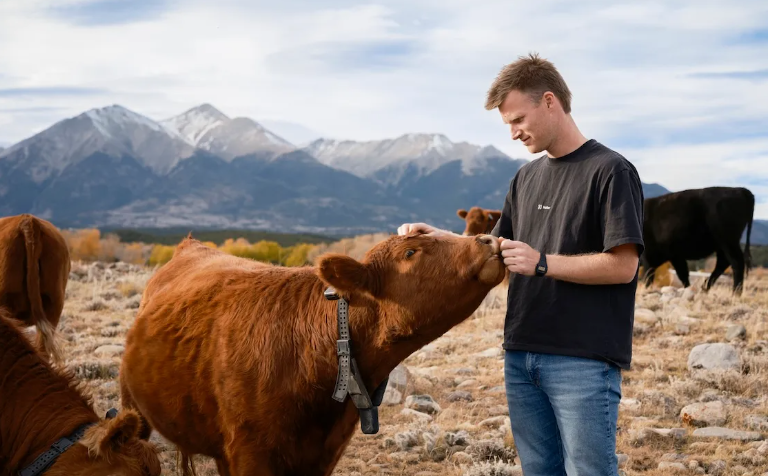
Image Source: Halter / supplied via TechCrunch
Craig Piggott, founder and CEO of Halter, with a Halter-equipped cow in frame.
Fluidity
What the vanguard model misses
PwC's vanguard model treats culture as a set of foundational practices, governance, workforce planning, process stability, that the best companies have figured out. Anduril's onboarding is deliberately unstructured, which most workforce-planning models would flag as a governance gap. Sierra's roles shift constantly without settling into fixed job descriptions, which most maturity models treat as organisational risk. Halter is actively coaching its own team toward more ambition, which doesn't appear anywhere on a checklist built around stability and process. All three are doing exactly what the maturity model says they shouldn't, and all three are growing.
Each founder can describe in a sentence or two what motivates the specific kind of person they need, and the hiring process is built to test for that rather than general competency. Luckey needs people who want to build something that matters more than they want comfort or career options. Taylor needs people who can perform well under real ambiguity, the same conditions the product itself operates in. Piggott needs people willing to push past the cultural instinct toward caution, the instinct he's been working against in his own company since it started gaining real momentum. None of those needs would be met by the other two companies' hiring approaches. Anduril's filter would drive away the kind of generalist Sierra specifically wants. Sierra's two-hour open-build interview would tell you nothing about whether someone could handle Anduril's unstructured onboarding. Halter's internal coaching toward ambition is solving a problem that neither Anduril nor Sierra has.
Diligence
A PwC-style maturity checklist tells you whether a company has governance documents and a workforce plan, but it doesn't tell you whether the people inside are mission-driven. That alone can disclose more about how companies perform under pressure than any maturity score. There is no universal “AI company culture” because culture is an output of mission.